Other Builds · Real build

Free Seed Library Box Made from Salvaged Road Signs

A weatherproof box on a post where anyone can leave and take garden seeds, like a little free library for seeds. The shell is cut from salvaged aluminium road signs, and inside are drawers of labelled mason jars.

Built and documented by The LARK seed box team, engineering students at Cal Poly Humboldt. Originally published on Appropedia: “CCAT seed library 2024” under CC BY-SA 4.0.
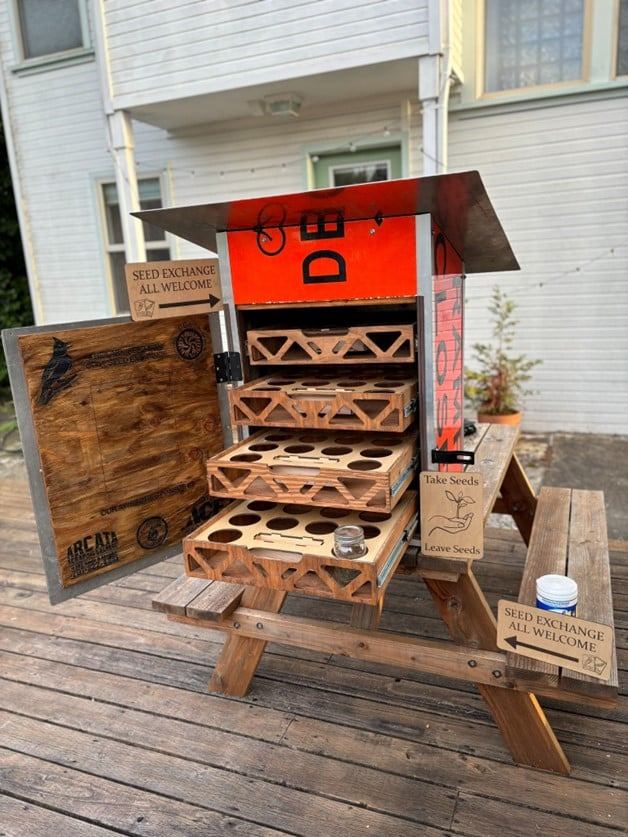
The finished seed library with its drawers of jars
The finished seed library with its drawers of jars. Photo: Antonio Mendoza III, CC BY-SA 4.0, via Appropedia (resized)

The story behind this build

A campus sustainability center wanted an easy way for the community to swap seeds. A team of engineering students designed the LARK seed box in 2024 after sketching several very different concepts, from a hexagonal jar holder to a small cabinet with a garage-style door.

The final box reuses old road signs for its tough, waterproof outer shell, which gives it its bright orange look, and uses mason jars inside so the seeds stay dry and sorted.

How it is designed

  • The box is up to 3 ft high, 2 ft wide and 1 ft 8 in deep.
  • It stands on about 2 ft of exposed double-H steel post, set in concrete below ground.
  • The frame is 2×2 lumber, sanded, stained and screwed together.
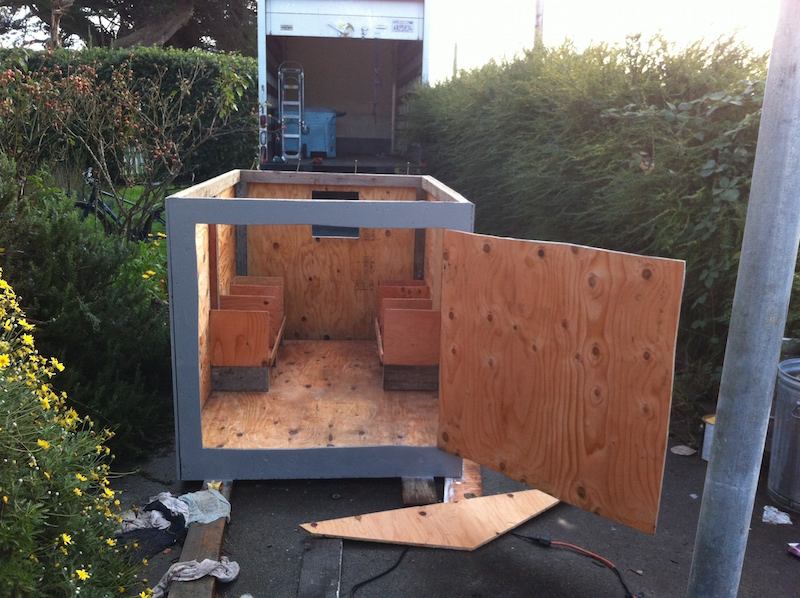
  • The outer shell is salvaged aluminium road signs cut to shape and fixed with corner brackets and roofing screws.
  • The door is ½ in plywood faced with road sign, hung on three hinges with a latch and an optional lock.
  • The drawers are cut from a single ⅜ in plywood sheet, with CNC-cut patterns on the fronts. The builders designed them to hold up to 20 sixteen-ounce mason jars.
  • Organisers in the drawers are labelled with letters for columns and numbers for rows, and a poster inside the door lists what is in each jar.

Materials they used

  • Aluminium road signs (6, salvaged)
  • 2×2 lumber, 8 ft lengths (5)
  • ⅜ in plywood, one 4 × 8 ft sheet, for the drawers; scrap plywood
  • ½ in plywood for the door
  • Drawer slides (4 pairs)
  • Hinges, handle, latch and lock
  • Aluminium corner brackets, roofing screws and 2½ in wood screws
  • Window seal and caulk
  • Wood glue and wood stain
  • About 100 mason jars
  • A metal post (double-H) and concrete

How they built it

  1. 1Build the frame

    The 2×2 lumber was cut, sanded, stained and screwed together into the box frame.

  2. 2Clad it with road signs

    The salvaged road signs were cut to fit each face of the frame and fixed with corner brackets and roofing screws.

  3. 3Make the drawers

    Drawers were cut from one sheet of ⅜ in plywood, with patterns cut into the fronts on a CNC machine, and mounted on drawer slides.

  4. 4Hang the door

    A ½ in plywood door faced with road sign was hung on three hinges, with a latch to keep it closed and weather seal around it.

  5. 5Set the post

    A hole was dug, the steel post set in concrete, and the box fixed on top.

  6. 6Fill and label

    The drawers were filled with labelled mason jars, and a poster inside the door shows which seeds are in which jar.
More photos

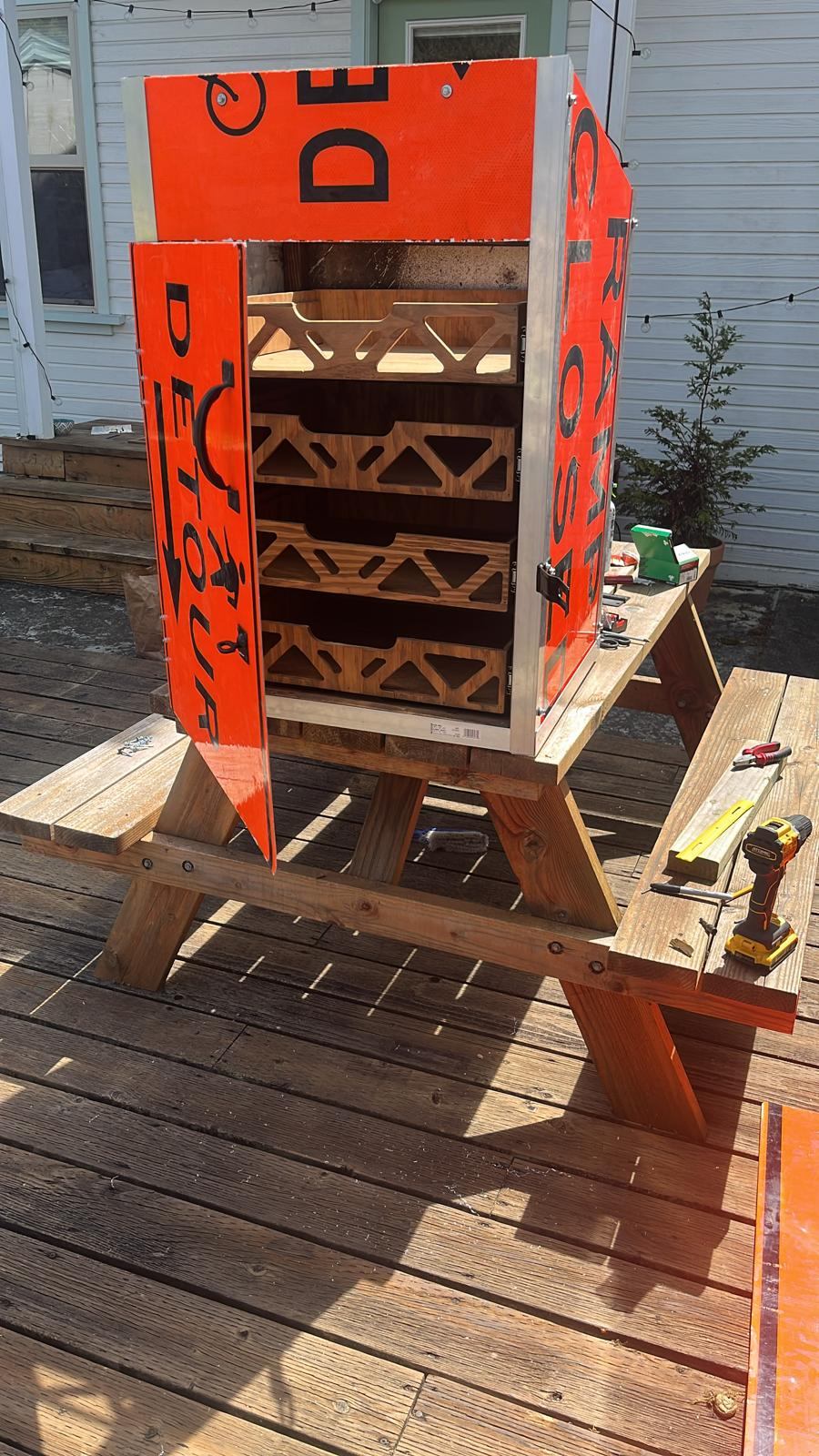
Front view: drawers behind the road-sign shell
Front view: drawers behind the road-sign shell. Photo: Antonio Mendoza III, CC BY-SA 4.0, via Appropedia (resized)
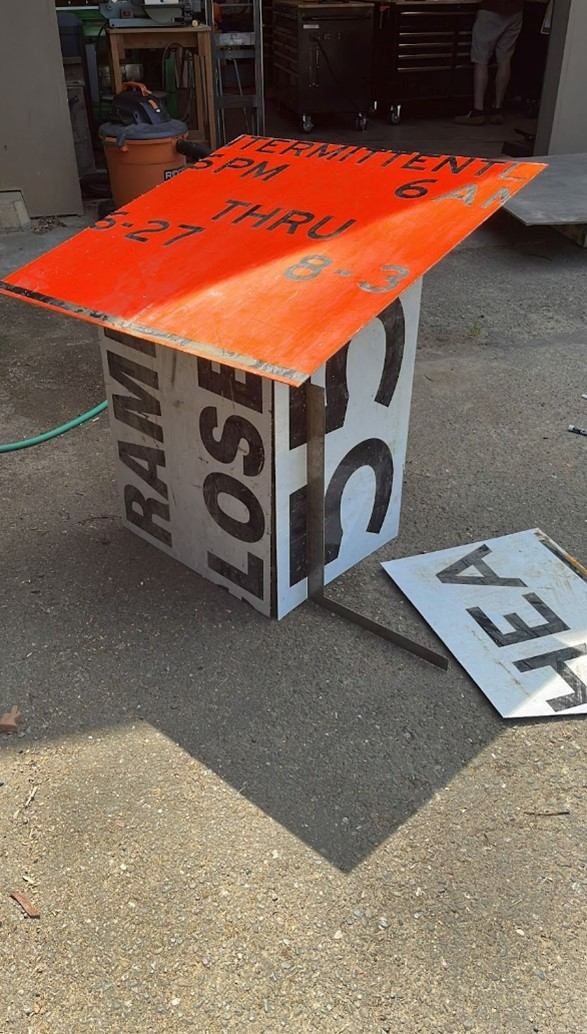
The shell, cut from salvaged road signs
The shell, cut from salvaged road signs. Photo: Antonio Mendoza III, CC BY-SA 4.0, via Appropedia (resized)

Use and upkeep, from the builders

  • To take seeds: open the door, find the seed on the poster, open that drawer, take some from the jar, close the jar and put it back, then close the drawer, the door and the latch.
  • To leave seeds: find the right jar on the poster (or an empty one), add your seeds, close everything up the same way.

Our notes if you build one

  • Reused road signs must be legally obtained; never take signs that are still in use. Scrap yards and road authorities sometimes sell retired signs.
  • Seeds keep best cool, dark and dry. A small packet of silica gel in each jar helps in damp climates.
  • Label jars with the year the seeds were saved, since most seeds lose vigour after a few years.

Credits and license: Built and documented by The LARK seed box team, engineering students at Cal Poly Humboldt. Originally published on Appropedia: “CCAT seed library 2024” under CC BY-SA 4.0. This page is our summary of their documentation and is shared under the same license (CC BY-SA 4.0); photos are credited individually. Measurements and costs are the builders' own and refer to their site and year. DIY Outdoor Builds did not build this project.

Building work can be dangerous and may need a permit. Check local rules and use a qualified professional for electrical, gas and structural work.

Built something like this?

Share your own version with your photos, measurements and what you changed.
Share your build

Step-by-step guides for similar projects

All guides

More real builds

All builds